Artificial intelligence (AI) will have an enormous impact on the way people live and work in the coming decades. This reasoning is the basis of the European strategy on AI, which was launched in April 2018 and has been confirmed since.

So begins one of the most recent communications on AI by the EU Commission, COM(2021) 205, produced in April 2021. It continues:
The potential benefits of AI for our societies are manifold, from less pollution to fewer traffic deaths, from improved medical care and enhanced opportunities for persons with disabilities and older persons to better education and more ways to engage citizens in democratic processes, from swifter adjudication to a more effective fight against terrorism and crime, online and offline, as well as enhancing cybersecurity. AI has demonstrated its potential by contributing to the fight against COVID-19 [bold lettering in the original], helping to predict the geographical spread of the disease, diagnose the infection through computed tomography scans and develop the first vaccines and drugs against the virus … At the same time, the use of AI also carries certain risks, such as potentially exposing people including children, to significant mistakes that may undermine fundamental rights and safety, as well as to our democratic processes.
While being ahead in terms of legislation and perhaps also policy, the EU is however lagging behind the US and East Asia in terms of actually developing the new technology. The US has long been leading in technology development and prefers to let the market and the academic research associated with it work its magic over legislation. China has been pursuing a conscious strategy of claiming large market shares in new technological fields for a long time, seeing a window of opportunity as the game field is shifting. Out of the nine or so companies that are driving worldwide AI development – Google, Amazon, Apple, Facebook, Microsoft, IBM, Baidu, Tencent and Alibaba – none are European.
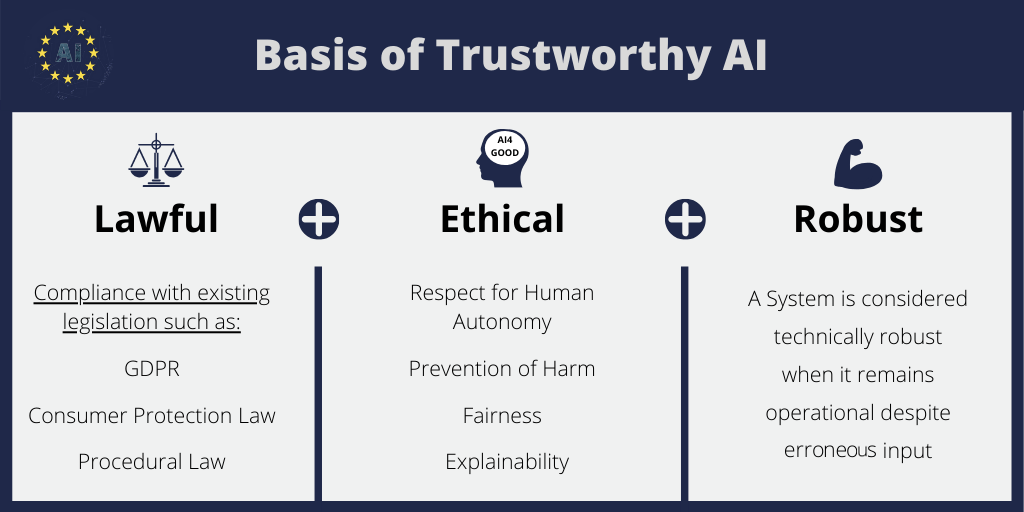
But there may still be time for the EU to catch up. The total amount of data in the world is projected to reach around 80 zettabytes in 2021 (it’s a lot.) But already by 2025, the total amount could be 180 zettabytes – more than double. As we explored under The Technologies, vast amounts of data are the key to developing truly powerful AI. The EU, the US and China are all competing for a piece of this steadily growing cake.
It is between these three giants that the struggle stands. But there is no shortage of other players – a couple of years ago, Russia’s Vladimir Putin welcomed the prospect of developing AI and robotics weapon systems. This would, he suggested, make warfare a question of one side’s robots beating the other side’s robots, after which it would be game over. To this must be added the prospect of war changing in more subtle ways, as new techniques of cyberwarfare and information warfare are pursued, especially by those players who wish to change the status quo.
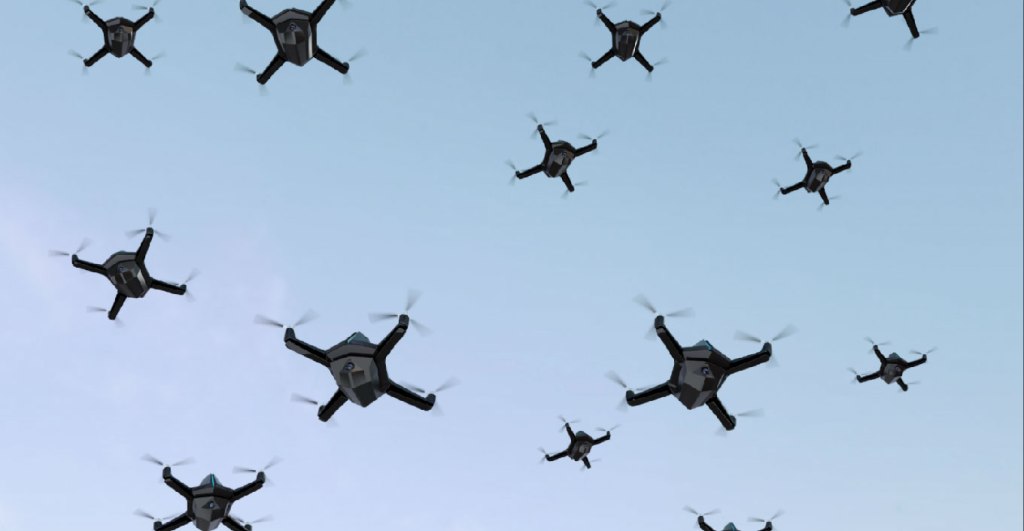
Amid the race towards developing the new technology – for economic as well as military purposes – at least three major crises appear to loom on our horizon. In the 21st century, we run the risk of environmental disaster, nuclear war, and societal disruption due to rapid technological advances. If we get either of them wrong, getting the other two right will be of little comfort. At Radius, we nonetheless focus on the risk of technological disruption. With a bit of luck, getting this right can help us solve the other two.
How are the nations of the world rising to meet these challenges? Initially, we should note that modern technological development has certainly contributed to the integration of world markets, peoples and governments. (This we usually call “globalization”.) But there are distinct developments in the opposite direction, towards compartmentalization, as well.
As the Cold War ended around the year 1990 with the collapse of the Soviet Union, what has been called “the End of History” (by Francis Fukuyama) began. The US rolled out its free trade policies around the world, and it was predicted that all the world soon all be one great liberal democratic market economy.
Thirty years later, things no longer appear that simple. Hence, we may well talk about “the Return of History”.
Beginning sometime around the financial crisis of 2008, the US policing of the world at large began to wane (or at least become less forceful.) So it was with belief in the liberal narrative. A nationalist reaction against the globalization which had been accelerated in the 1990s can now be seen in most Western countries. In Russia, China and Singapore, just to name a few, a distinct alternative to democracy has proven resilient.
Tackling the three issues of environmental catastrophe, nuclear war and technological disruption, it seems far from clear that the nation states of the world will be working as one. To the side of the issues at hand are political intrigues and local interests, and a reluctance to enter into global cooperation with the UN, the IMF, and the US, which are taken to be wolves in sheep’s clothing. Against the tendency towards integration, states are maintaining nationalist, cultural and religious identities that are at odds with the liberal narrative.
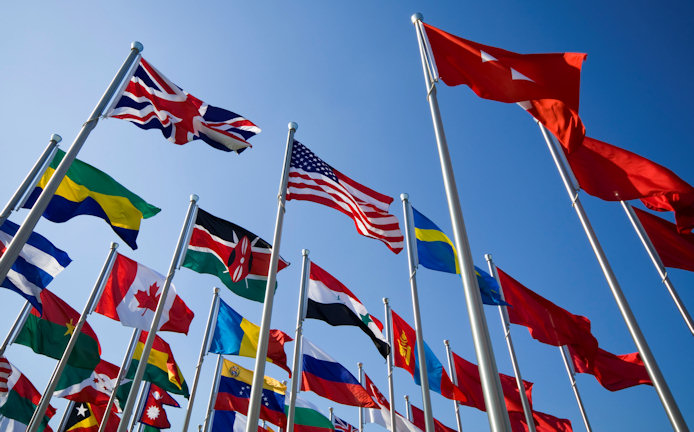
This conflict between, on the one hand, global networks of power and capital and, on the other hand, local identities are present also within societies. Sociologist Manuel Castells has dubbed this a conflict between the Net (faceless, globally networked processes) and the Self (a meaningful local identity.) It is not the case that the new technologies are only providing global networks with more powerful tools of communication and control. They are also creating the impetus for locally based identities to act as a counterpower, formed either in defiance of the power of global networks or around a project seeking to shape that power. Examples range from the Bible Belt conservatives of the US to Al Qaeda and ISIS, from the Catalonian nationalist movement to the Extinction Rebellion. And these counterpowers make creative use of the new technology as well.

We should note that a failure to integrate the states of the world need not be decisive. The same goes for integrating different identities within societies. Rather than putting all the eggs in one basket, as the saying goes, a certain degree of discord and competition might help to make sure that a multitude of solutions are tried out. It is a fine balance act, avoiding war and otherwise excessive conflict, while at the same time resisting the temptation to make everything uniform and subject to the one true order.
In an important sense, the liberal narrative fails to provide that intense sense of absolute meaning and purpose that other creeds tend to offer. It asks a lot of its proponents, perhaps too much. The individual is left on her own, forced to amass the courage and self-sufficiency required to navigate through an absurd world. This appears to have become more apparent in the past 30 years. Economic brute force or superstitious categorical demands on action tend to win out more often than not. Nevertheless, the heart of the liberal narrative is not tied to the trajectory of any given system of meaning. It only insists on the mediation between ethical enterprises, never a final judgment. As such it is likely to prove resilient as the power and the counterpowers of the online and offline worlds continue to clash.
If we are to maintain a tentative belief in liberal democracy, understanding the implications of The Technologies of today is key to knowing how to navigate the landscape ahead. Even though global politics may appear to be distant and unimportant for one’s individual life, seeing the bigger picture of global cooperation and competition is important for recognizing the difference one may make in the everyday.
Read more:
The Technologies
Work & Leisure
Knowledge & Education
Romance & Family Life
Home
Sources for the above
Official documents
EU Commission. Communications COM(2016) 381, COM(2018) 795, COM(2021) 205; Expert report “The Future of Work? Work of the Future!” (2019)
EU Parliament. Draft report 2015/2103 (INL), Res 2015/2103 (INL); IPOL Study “European Civil Law Rules in Robotics (2016), STOA Policy Briefing “Legal and ethical reflections concerning robotics” (2016)
Literature
Beck, Ulrich. Risk Society (Sage 1992)
Beck, Ulrich. “The Reinvention of Politics: Towards a Theory of Reflexive Modernization”, in Reflexive Modernization (Polity 1994)
Castells, Manuel. The Information Age Trilogy I: The Rise of the Network Society (2nd ed, Wiley-Blackwell 2010)
Castells, Manuel. The Information Age Trilogy II: The Power of Identity (2nd ed, Wiley-Blackwell 2010)
Castells, Manuel. The Information Age Trilogy III: End of Millennium (2nd ed, Wiley-Blackwell 2010)
Giddens, Anthony. “Living in a Post-Traditional Society”, in Reflexive Modernization (Polity 1994)
Harari, Yuval Noah. 21 Lessons for the 21st Century (Spiegel and Grau 2018)
Online resources (visited April 2021)
Artificial Intelligence News. artificialintelligence-news.com
MIT Technology Review. https://www.technologyreview.com/
State of AI Conference. https://www.stateof.ai/
The Verge. “Putin says the nation that leads in AI ‘will be the ruler of the world'”, 2017-09-04. https://www.theverge.com/2017/9/4/16251226/russia-ai-putin-rule-the-world
 RADIUS